

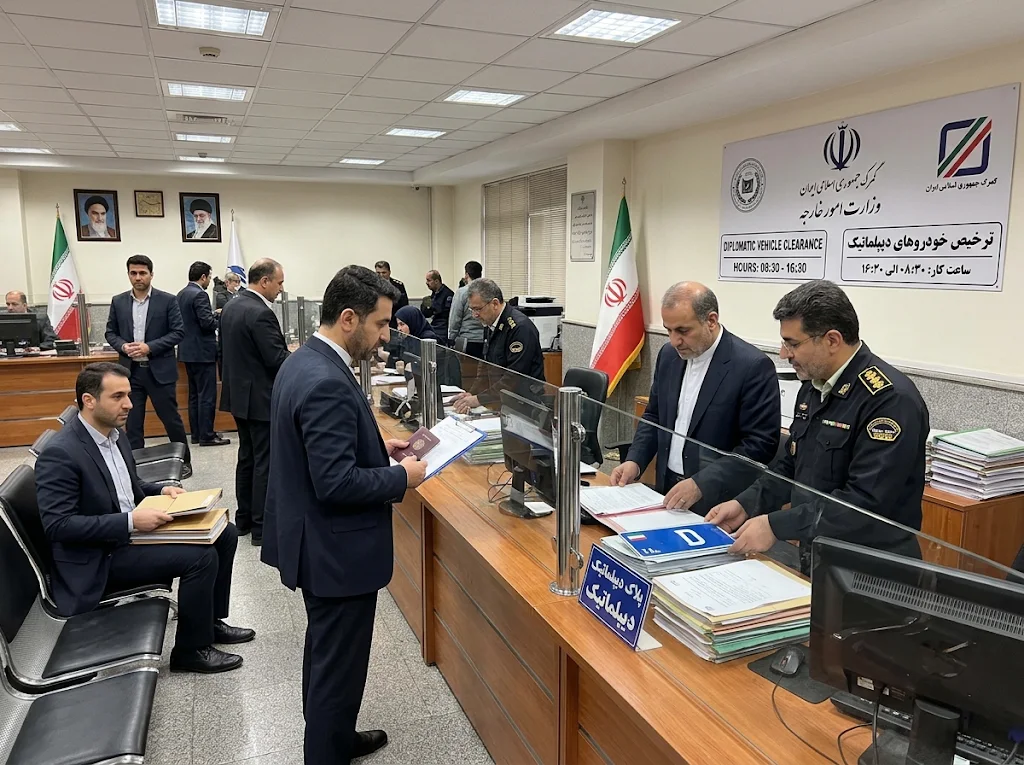
The diplomatic vehicle clearance period in Iran is usually about 3 to 6 weeks after your vehicle reaches the port, depending on circumstances, and only if your file is complete. The ship and the customs officer are not the biggest variable. The condition of your file is. For an overview of the full process, see our guide to Diplomatic Vehicle Clearance in Iran. This article looks at the same process through one lens: time. We explain when the clock starts, which stages tend to slow down, and what you can do before shipping to keep your timeline predictable.
When Does the Clearance Clock Start?
The clearance period begins when your vehicle arrives at the port of entry, such as Bandar Abbas. Shipping time is separate. A car may spend weeks at sea, and none of that counts toward clearance.
What happens before arrival still matters a great deal. In most cases, the Ministry of Foreign Affairs reviews your mission’s request and sends a tax exemption letter to the customs administration. If that letter isn’t ready when the car lands, the car simply waits.
So the useful question isn’t “When does clearance start?” It’s “How ready is my file on the day the car arrives?”
Which Stages of the Diplomatic Vehicle Clearance Period Take the Longest?
Each stage depends on the one before it. A delay early in the process carries through to every later step.
| Stage | What happens | What usually slows it |
| Ministry approval | The Ministry reviews the Note Verbale and issues the exemption letter to customs | A late request, or details that don’t match the vehicle records |
| Port arrival and inspection | Customs checks the VIN, engine number and specifications against the documents | Any mismatch between the invoice, the bill of lading and the car itself |
| Customs file review | Several departments check eligibility and issue the release | Missing Persian translations, unsigned forms, follow-up queries |
| Registration and plates | The Traffic Police inspect the vehicle and issue diplomatic plates | An incomplete clearance file or missing insurance |
Customs file review is usually the most document-heavy stage. A query from one department can send the file back a step. Ministry approval is the stage people most often underestimate, because it happens out of sight, before the car arrives.
Common Reasons Embassy and Consulate Vehicles Get Held Up
Most delays don’t come from complex legal problems. They come from small details that are easy to miss when the paperwork moves between countries and languages.
- Mismatched identifiers. A single wrong character in the VIN or engine number between the bill of lading and the invoice usually means a formal amendment is required before customs continues.
- No exemption letter yet. Without the Ministry’s letter, customs generally cannot process the vehicle under diplomatic status.
- Incomplete translations. Customs declarations and protocol forms must be completed in Persian. Partial or uncertified translations are a frequent cause of returned files.
- Unsigned or unstamped mission letters. An official letter without the proper signature or seal is often treated as incomplete.
- Outdated information. Regulations change. A procedure that worked for a colleague’s car last year may be different under current rules.
- Public holidays. Government offices close on official holidays, and the file pauses with them.
Steps You Can Take Before Shipping to Shorten the Wait
You have the most control over the timeline before the car leaves its port of origin. These steps usually make the biggest difference:
- Ask your mission to send the Note Verbale early. The Ministry’s review can then run while the car is still at sea.
- Compare identifiers across every document. Check that the VIN, engine number, make and model are identical on the title, invoice and shipping documents.
- Arrange certified translations in advance. Don’t wait for customs to ask for them.
- Confirm your paperwork against current rules. Our checklist of documents for embassy vehicle import and our overview of embassy vehicle import regulations are good starting points.
- Appoint a representative before arrival. Someone should be ready to act on the day the vehicle lands.
What If Your Clearance Runs Longer Than Expected?
First, find out exactly which stage your file is in. “Still at customs” isn’t enough. Ask whether a query is pending, which document it concerns, and whether the exemption letter has reached customs.
Then decide who will resolve the query. Often it’s a document only your mission can reissue, so keep your administrative officer informed.
Finally, plan your first weeks in Tehran with the delay in mind. Until the Traffic Police issue diplomatic plates, the vehicle generally cannot be used on Iranian roads, even after customs releases it.
How Tehran Offers Keeps Your Clearance on Track
No one can promise a fixed date, because several government offices set their own pace. What we can do is reduce the avoidable delays. Our team reviews your documents for mismatches before submission, helps you complete the Persian forms correctly, and manages the submission on your behalf. You work with one case manager who gives you regular updates in English, so you always know which stage your file is in. We also answer on Fridays and holidays, so your questions don’t have to wait for the work week.
Plan the Weeks, Not Just the Paperwork
For a complete file, a diplomatic vehicle clearance period of about 3 to 6 weeks after arrival at the port is a realistic expectation, depending on circumstances. Most of the extra weeks people experience come from issues that could have been caught before the car shipped. If your vehicle is about to ship or is already at the port, contact our team by phone, WhatsApp or email at info@tehranoffers.com. We’ll review your file and tell you where your timeline is most likely to tighten.
Frequently Asked Questions
Does the clearance period include shipping time?
No. The period is usually counted from the vehicle’s arrival at the Iranian port. Shipping time depends on your route and carrier and is separate.
Can the process begin before my vehicle arrives?
Yes, and it should. Under current practice, the Ministry approval and document checks can usually start before arrival. Starting early is one of the most effective ways to shorten the wait.
Can I drive the vehicle before diplomatic plates are issued?
Generally, no. The vehicle must be registered with the Traffic Police and receive diplomatic plates before it can legally be used on Iranian roads.
How will I know where my file stands?
If you work with Tehran Offers, your case manager sends you regular updates. Otherwise, your mission’s administrative officer is usually your point of contact with the Ministry.













Join The Discussion